Mastering Rappelling: Essential Steps for Safe Climbing Descents
Getting to the top of a challenging climb is a monumental achievement, a moment of triumph against gravity and personal limits. Yet, every seasoned climber knows that reaching the summit is only half the journey. The descent, often overlooked in the thrill of the ascent, is equally, if not more, critical. While belayed lowering is a common method for beginners, mastering rappelling is an indispensable skill that elevates a climber to a new level of self-sufficiency and versatility. It's a controlled self-descent technique that unlocks a wider range of climbing possibilities and ensures safe passage down complex terrain.
Rappelling becomes your primary option in various scenarios where lowering on belay, walking off, or down-climbing simply isn't feasible or preferable. Imagine standing atop a sea cliff with no accessible trail back down, or needing to clear loose rock from a route before an ascent. Rappelling is also crucial in emergency situations, such as a climber rescue, or when you need to minimize wear on fixed anchor systems, like those equipped with rappel rings, after cleaning. It grants you the independence to manage your descent, making you a more competent and well-rounded climber.
The Critical Role of Rappelling in Climbing Descents
For many climbers, especially those venturing into multi-pitch routes, remote areas, or those looking to expand their skillset beyond the gym, rappelling isn't just an option—it's a necessity. This self-reliant descent method is vital for navigating a variety of climbing environments.
Consider the following situations where rappelling proves indispensable:
-
Inaccessible Base: When the base of your climb has no easy approach or exit trail, such as on towering sea cliffs or remote big walls, rappelling provides the only practical way down.
-
Route Cleaning: Before tackling a new route, especially one prone to loose rock, rappelling allows you to descend safely while dislodging any unstable material, making subsequent climbs safer.
-
Emergency Rescues: In scenarios where a climber is injured and a descent from above is the safest and most efficient rescue method, a well-executed rappel is paramount.
-
Anchor Preservation: After cleaning an anchor, especially on heavily used routes, rappelling minimizes friction and wear on fixed hardware like rappel rings, extending their lifespan and reducing maintenance needs.
-
When Other Options Fail: Any situation where down-climbing is too risky, walking off is impossible, or relying on a belay partner for a lower isn't an option.
While the ability to rappel opens up new avenues in climbing, it's crucial to acknowledge the inherent risks. A significant percentage of climbing accidents occur during rappels due to missteps or inexperience. This underscores the absolute importance of learning and perfecting this skill under the vigilant guidance of an expert. We cannot stress enough: do not attempt to rappel independently until you have thoroughly mastered the process and gained confidence under supervision. The best path to mastery is through mentorship from an experienced climber or by enrolling in certified climbing courses. For a deeper dive into when and why this skill is vital, explore
When to Rappel: Crucial Situations for Climbers to Know.
Essential Gear for a Safe Rappel
Your standard climbing kit forms the backbone of your rappel setup, but a few crucial additions are required to ensure maximum safety and efficiency. Proper gear selection and inspection are non-negotiable for any climbing descent.
Here's a breakdown of the essential gear for rappelling:
-
Harness: Your personal connection to the rope system. Ensure it's correctly fitted and inspected for wear and tear.
-
Belay Device: While used for belaying, many devices are also approved for rappelling.
-
Tubular Devices (e.g., ATC Guide, Reverso): Most tubular-style devices are versatile and suitable for both belaying and rappelling. They are generally intuitive to use.
-
Figure-8 Devices: Classic figure-8s are excellent for rappelling, known for their smooth rope feeding and heat dissipation, especially on long rappels. Some climbers prefer them specifically for rappelling over belaying.
-
Mechanical Devices (e.g., Grigri, Eddy): Primarily designed for belaying, some mechanical devices can be used for rappelling, but always check manufacturer instructions. They often offer a level of auto-locking, which can be advantageous but also requires specific techniques.
Critical Note: Always consult your belay device's manufacturer recommendations to confirm its suitability and proper technique for rappelling. Some devices perform better than others for this specific application.
-
Climbing Ropes: Typically, two ropes are used for rappelling (or a single rope folded in half). Ensure ropes are appropriate for the length of the descent and thoroughly inspected for damage.
-
Personal Anchor System (PAS): This is a key addition for many rappels. A PAS, typically a chain of loops or a dedicated sling, attaches to your harness's tie-in points (often with a girth hitch) and allows you to safely clip into the anchor while setting up your rappel. This keeps your hands free and secure.
-
Autoblock/Prusik Cord: A 24- to 36-inch length of 5mm or 6mm accessory cord, tied into a loop with a double fisherman's knot, is essential for creating an autoblock hitch. This friction hitch serves as a vital backup directly below your belay device, providing hands-free braking in case you lose control or need to pause. It's imperative to inspect and replace this cord periodically, as the friction generated during rappels can degrade its strength.
-
Locking Carabiners: You'll need several locking carabiners for connecting your belay device, PAS, and autoblock to your harness and the anchor.
-
Rappel Gloves (Optional but Recommended): Especially for longer or multi-pitch rappels, gloves can protect your hands from rope burn and provide a better grip, enhancing comfort and control.
Understanding and selecting the right equipment is fundamental to a safe rappelling experience. For a comprehensive guide on various gear options and advanced techniques, be sure to read
Beyond the Belay: Rappelling Gear and Techniques for Climbers.
Step-by-Step Guide to Rappel Setup and Execution
This guide focuses on a common scenario: rappelling from a sport climbing anchor with two bolts. Remember, every rappel is unique, but these core steps provide a solid foundation.
1. Preparing at the Top of the Route
Before you even touch the ropes for your descent, meticulous preparation at the anchor is paramount.
-
Assess the Anchor: Even if it's a fixed sport climbing anchor, visually inspect both bolts, hangers, and any connecting material (chains, rappel rings) for wear, corrosion, or damage. Ensure it's redundant and bomber.
-
Secure Yourself: Clip into the anchor using your Personal Anchor System (PAS). This keeps you safely attached to the rock, allowing you to work hands-free with confidence. Double-check your PAS connection to your harness and to the anchor.
-
Rope Management: Carefully flake your rope(s). If using two ropes tied together, ensure the knot (usually a double fisherman's or an overhand bend) is neat and secure. If using a single rope threaded through rappel rings, ensure both ends reach the ground (or the next rappel station) and that there are no twists or tangles.
-
Environmental Scan: Look down the rappel line. Identify any potential snags, ledges, or hazards. Note the landing zone. Communicate clearly with any climbing partners.
2. Setting Up the Rappel Device and Backup
This is the most critical phase where errors can have severe consequences. Take your time, double-check everything.
-
Thread the Rope: Feed the bight of the rope (or both strands if using two ropes) through your belay device as per its manufacturer's instructions for rappelling. Ensure the brake hand side of the rope is oriented correctly.
-
Attach to Harness: Secure your belay device to your harness's belay loop with a locking carabiner. Ensure the carabiner is locked and properly oriented.
-
Set Up the Autoblock Hitch: Take your autoblock cord. Wrap it around the rappel ropes (below your belay device) three to four times, creating a friction hitch. Clip both ends of the cord loop into a locking carabiner, which then clips to your belay loop or a leg loop (depending on your preference and device, ensuring it doesn't interfere with your belay device). Test the hitch to ensure it grabs the rope firmly. This is your essential backup system.
-
Independent Checks: Before committing, perform a thorough buddy check with your partner, if present. Even if solo, conduct a meticulous personal check:
- Is the rope correctly threaded through the device?
- Is the belay device carabiner locked?
- Is the autoblock tied correctly and grabbing the rope?
- Is the autoblock carabiner locked?
- Are there any twists in the ropes?
- Are the ends of the ropes visible on the ground (or at the next anchor)?
-
Remove PAS: Once confident in your setup, unclip your PAS from the anchor. You are now solely connected by your rappel system. Maintain a firm grip on the brake strand(s).
3. Rappelling Down
The descent itself requires control, awareness, and a steady pace.
-
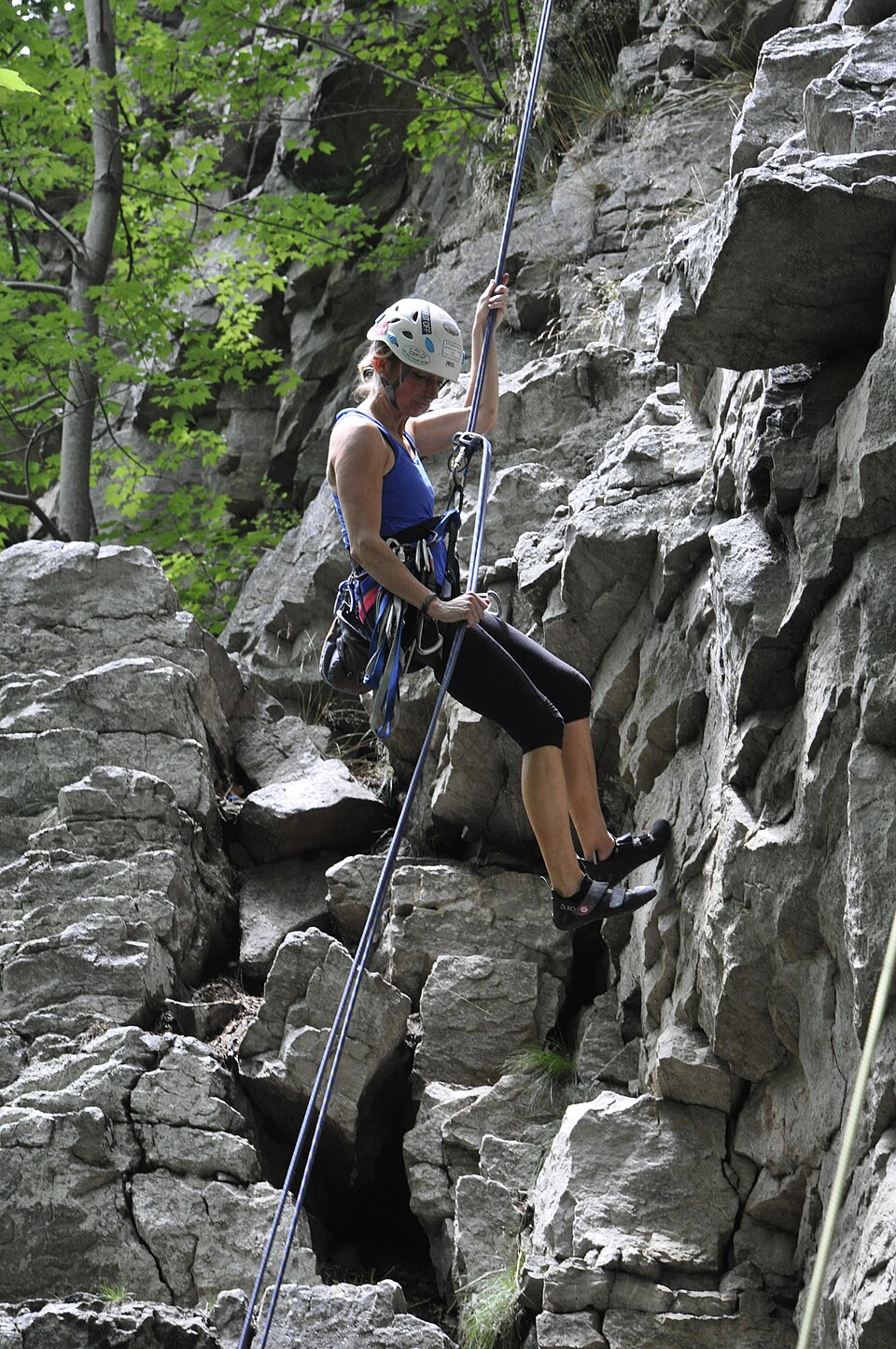
Controlled Descent: Begin to weight the rope slowly. Lean back, maintaining a balanced, athletic stance with feet wide on the rock. Keep your brake hand firmly on the rope below the device, ready to apply friction.
-
Body Position: Maintain a semi-sitting position, perpendicular to the rock face, with knees slightly bent. This allows for comfortable progression and better visibility.
-
Smooth Progress: Feed the rope through your belay device with your brake hand in a controlled manner. Avoid jerky movements. Use your guide hand above the device to manage the rope and keep it clear.
-
Watch the Autoblock: The autoblock should slide smoothly with you. If you release your brake hand, it should catch immediately, bringing you to a stop. Practice trusting this backup.
-
Avoid Hazards: Be mindful of loose rocks, sharp edges, or rope snags. Use your feet to push off the wall and control your distance from it.
-
Reaching the Ground/Next Anchor: As you approach your destination, slow your descent. Prepare to unclip from the system safely. If you're the last person down, retrieve the ropes by pulling one end through the anchor.
Prioritizing Safety and Continuous Learning
Rappelling is a beautiful and freeing aspect of climbing, but it demands respect and diligence. The statistics are clear: rappels account for a significant percentage of climbing incidents. This isn't to instill fear, but to emphasize the profound importance of safety protocols.
Always remember these core principles:
-
Seek Expert Guidance: Never try to learn rappelling from an article or video alone. Find an experienced climber to mentor you or, even better, enroll in a course taught by a certified climbing instructor. Hands-on, supervised practice is irreplaceable.
-
Double-Check Everything: Implement thorough personal checks and buddy checks if climbing with a partner. Develop a routine and stick to it.
-
Inspect Your Gear: Routinely check your ropes, harness, belay device, carabiners, and especially your autoblock cord for any signs of wear, cuts, or degradation. Replace gear as needed.
-
Practice in Controlled Environments: Before taking your skills to the vertical realm, practice your setup and descent techniques in a safe, controlled setting, such as a top-roped area or with a ground-based belay backup.
-
Stay Updated: Climbing techniques and gear evolve. Stay informed by reading current climbing literature, attending clinics, and discussing best practices with other experienced climbers.
Mastering rappelling is a transformative step in your climbing journey, providing the freedom to explore more ambitious routes and navigate diverse terrains with confidence. By understanding the essential gear, meticulously following established steps, and always prioritizing safety through expert guidance and rigorous practice, you can ensure that every descent is as controlled and successful as the climb itself. Embrace the learning process, respect the risks, and enjoy the thrill of truly independent climbing descents.